Hipodroomi junction: what temporary traffic management on a site really means and why the junction can’t simply be closed
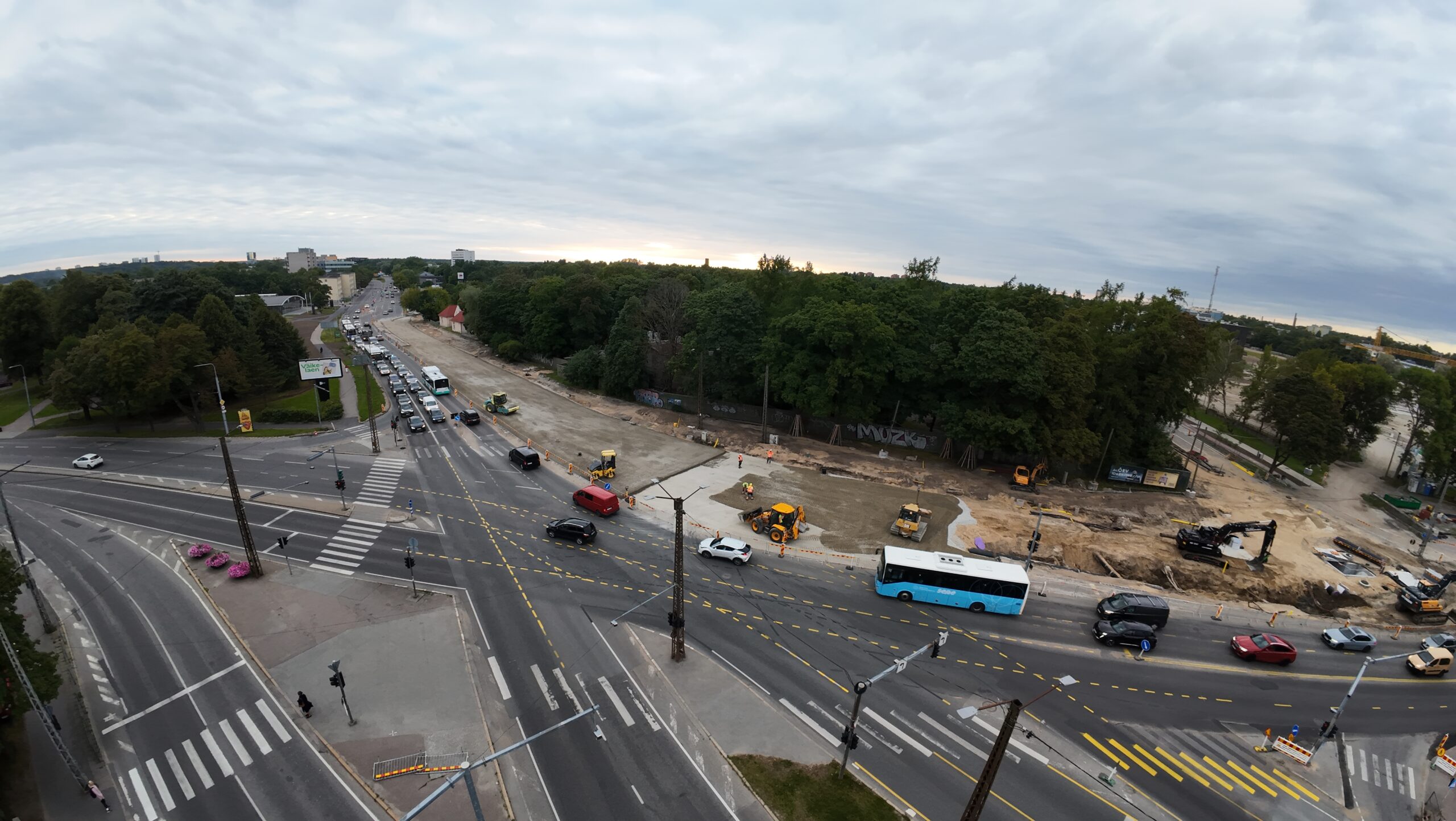
When reconstruction work began at the junction of Paldiski maantee, Endla Street and Mustamäe tee, most road users probably had the same first thought: how long is this going to take?
We understand that well. The Hipodroomi junction is one of the busiest traffic hubs in Tallinn, and every change there immediately becomes part of the daily routine of thousands of people. Temporary traffic management is never convenient — at best it is clear and safe. That is exactly the aim of our work.
AS Signaal TM is responsible for implementing the temporary traffic management on this site: installing and maintaining traffic control devices, the temporary traffic lights and the temporary road markings, all in accordance with the approved traffic management plans. As road users have many questions, we explain what actually goes on behind it.
Why is not the junction closed during construction?
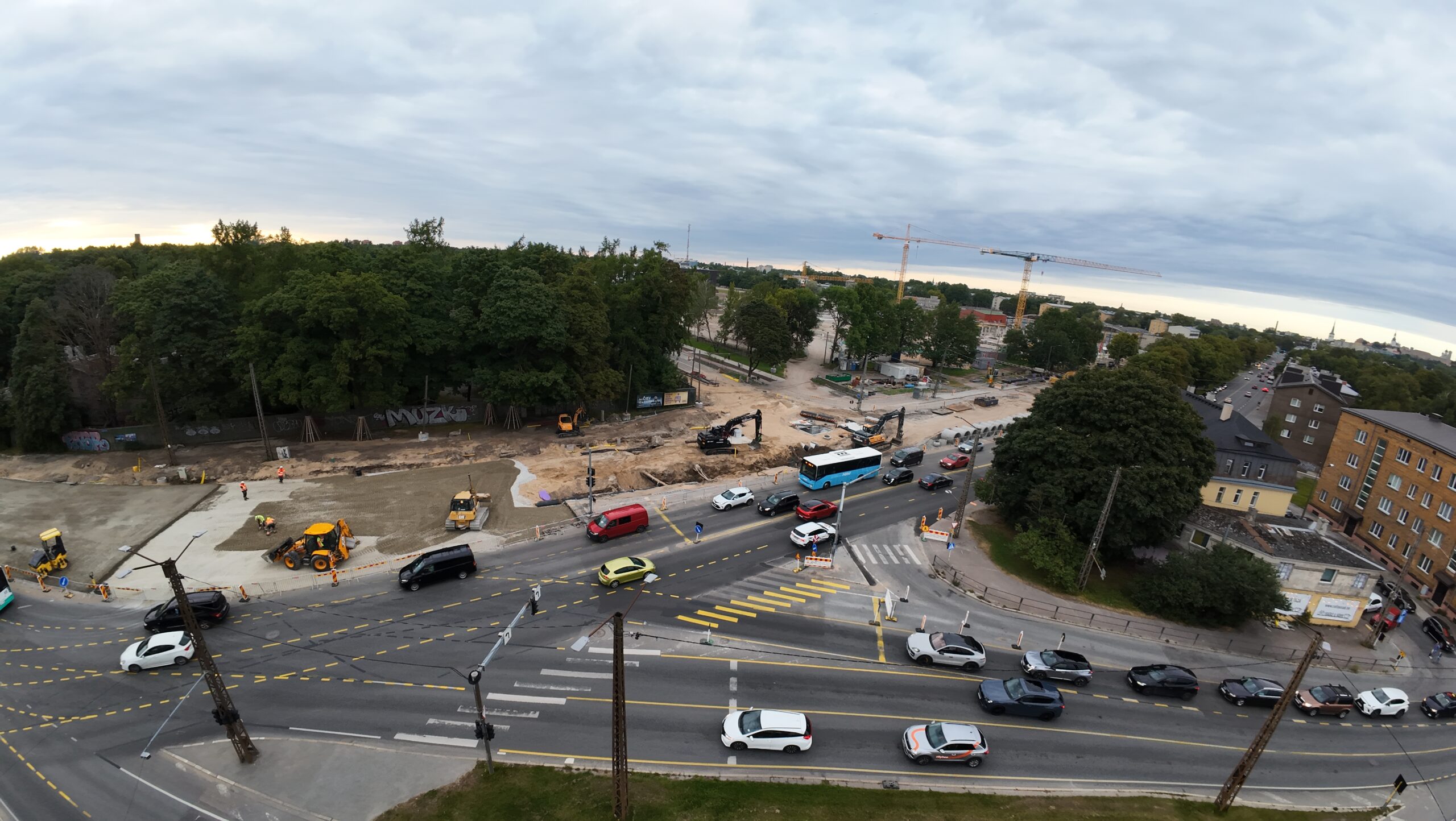
The purpose of the reconstruction is to connect the new Hipodroomi quarter with the rest of the city and to make the section of Paldiski maantee between Endla and Mooni Street safer, above all for pedestrians and cyclists. The works run along Paldiski maantee from Merelahe tee to Mooni Street and will take around a year and a half.
Throughout that time the junction has to stay open to traffic.
On a typical construction site, traffic can usually be diverted and the area closed off. Here that is not an option. That is the source of almost everything that makes traffic management on this site complex: the work is carried out in stages, and each stage requires its own traffic solution.
What does temporary traffic management mean in numbers?
For many people, temporary traffic management means a couple of yellow signs by the roadside. At a major traffic hub the scale is entirely different.
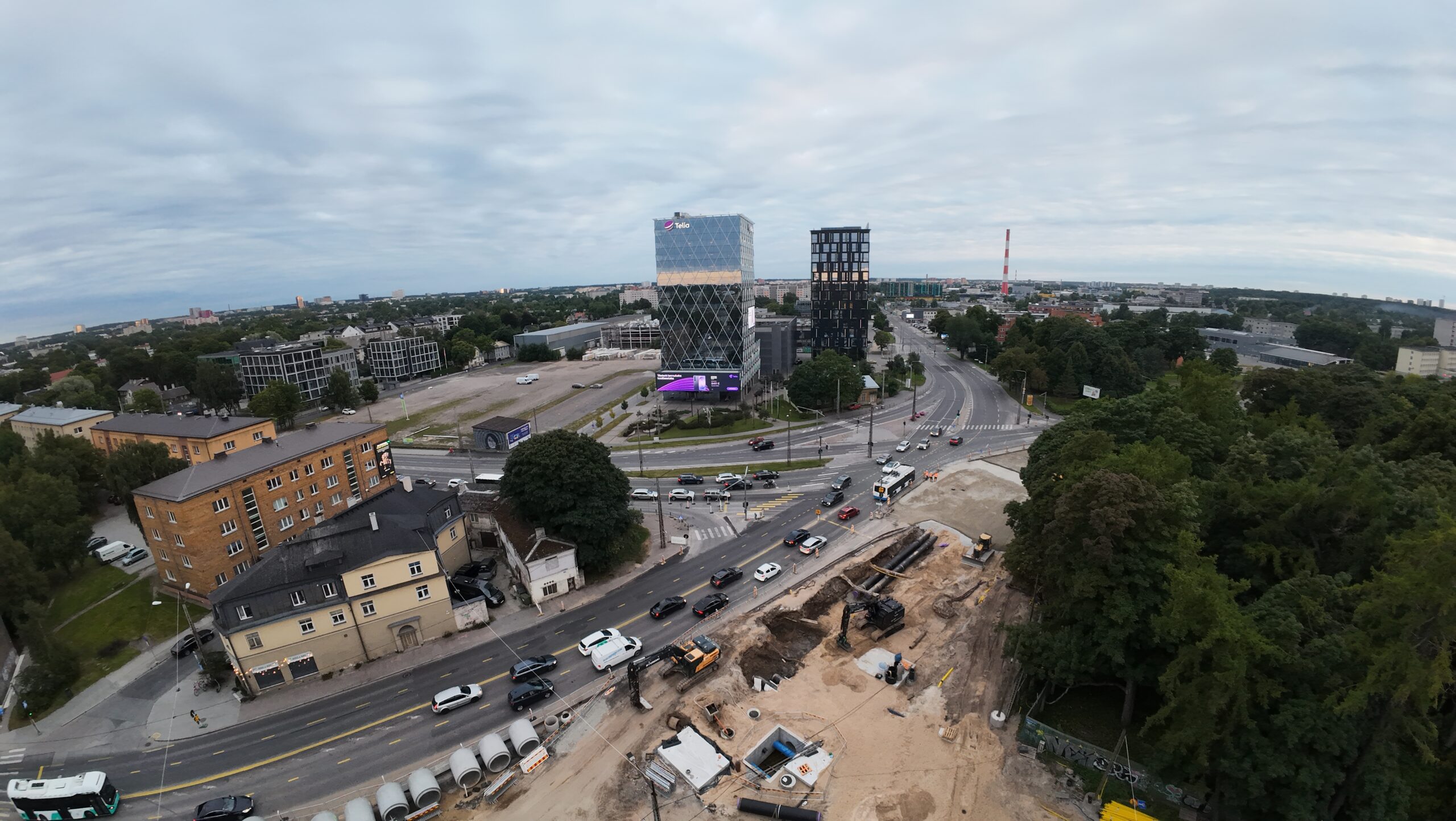
Depending on the construction stage, around 300–500 traffic signs may be in use on the site at any one time, along with supplementary plates and various direction signs. Compared with an ordinary urban construction site, that volume is considerably larger.
In addition, the site uses:
- temporary traffic lights, which have to be reconfigured every time the works move to a new stage
- temporary road markings, which must match the new traffic layout
- concrete barriers and other separation devices
Concrete barriers are used mainly around deeper excavations and to separate traffic flows — in places where a higher level of safety has to be ensured both for road users and for the construction workers.
The work does not end once the signs are up
This is the most common misconception about traffic management. Temporary traffic management is not a one-off installation at the start of construction, but a continuous process: the devices have to be moved, added to, checked and maintained as the works progress.
Nor is the job limited to putting out signs. A significant part of it is planning, approving and monitoring the traffic arrangements together with the Tallinn Transport Department. At every stage, the effect of the planned change on traffic is assessed before it is put in place.
The start of a new stage does not mean the work is done. Major changes of stage are in practice followed by a few days of monitoring and adjustment, during which the solution is fine-tuned where necessary.
A traffic management plan provides the solution on paper. The final verdict on how well it works always comes from the real traffic.
That is why traffic controllers are also used when larger changes are introduced on site. Their task is to help road users adapt to the new layout, prevent queues from forming and respond to situations that no plan can foresee. Some changes are carried out at night so that the impact on everyday traffic is smaller.
What can road users do themselves?
Put simply, the single biggest contribution to traffic management working well comes from an attentive road user.
- Follow the signs on the ground, not your habits. At a new stage, yesterday’s lane may no longer take you to the same place.
- Watch the road markings too. Temporary markings are part of the same solution and often make the signs more precise.
- Reduce your speed a little in the work area. At a lower speed, signs are far easier to take in.
- Allow yourself a few extra minutes, especially on the first days after a change of stage.
Why does all this matter?
At a major traffic hub, the aim of traffic management is not only to separate off the work area, but also to keep capacity as high as possible throughout the construction period. That calls for constant cooperation between the client, the designers, the contractor, the Transport Department and the traffic management team.
The summer construction season is a test for everyone involved. Road users adapt to changing driving conditions, for contractors it is the most intensive working period — and the same is true for those managing the traffic.
The aim of well-functioning temporary traffic management is simple: construction work can go ahead safely, and with as little disruption to road users as possible. The larger and more complex the site, the greater the role traffic management plays in the success of the whole project.
Planning works that will affect traffic?
We prepare traffic management plans, obtain the approvals and carry out temporary traffic management throughout Estonia — including temporary traffic lights and road markings where needed.