How is a traffic sign made? A look inside Signaal’s production
We usually only notice a traffic sign once it is already in place by the road. Behind it, though, is an entire production process, several specialists and a great deal of handwork that demands precision.
AS Signaal TM has been manufacturing traffic signs since 1974. To this day our signs are made in Tallinn, where we combine decades of experience with modern production technology. Around five people work in our production every day, making sure the signs we are asked for are made to a high standard and reach the client on time.
Meie tootmises osaleb igapäevaselt ligikaudu viis inimest, kes hoolitsevad selle eest, et tellitud märgid valmiksid kvaliteetselt ja jõuaksid õigeks ajaks kliendini.
But how is a traffic sign actually made? Let’s take a closer look.
From order to design
Every traffic sign starts with an order. First, the project manager checks which signs the client needs, what their dimensions are and which materials should be used.
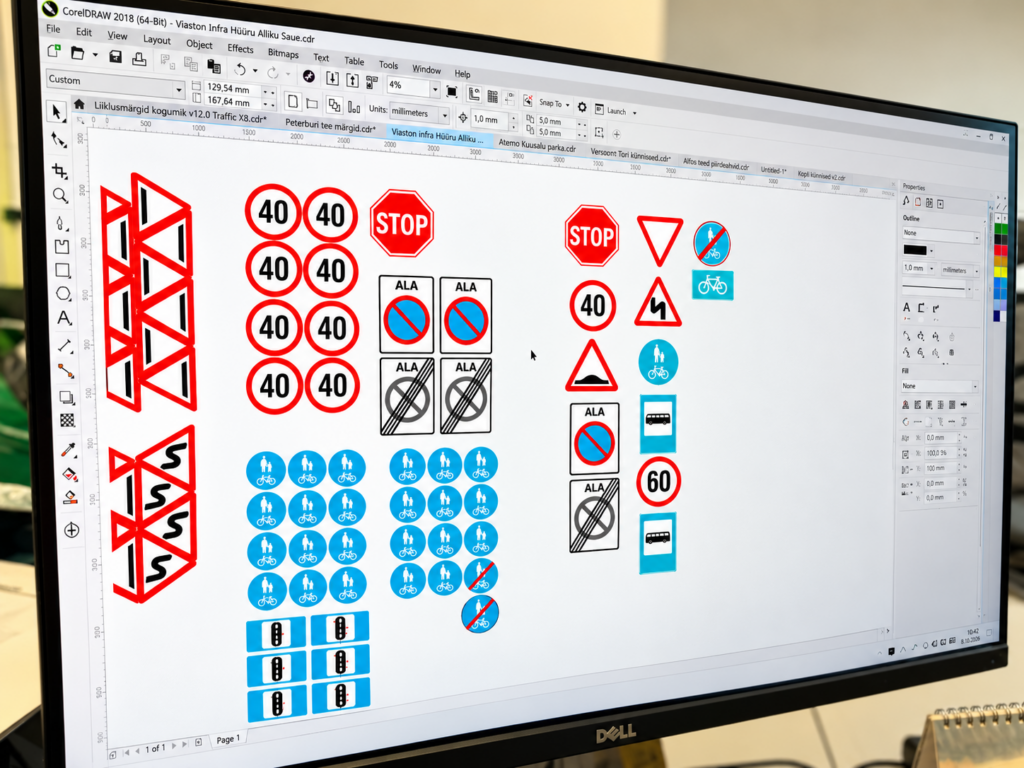
The designer then takes over and checks the order details again. Where needed, they clarify the technical requirements with the client and prepare the sign designs using specialist design software such as CorelDRAW.
Once the designs are ready, the designer orders the right sign blanks from the metal workshop. This way, design work and blank production can start in parallel.
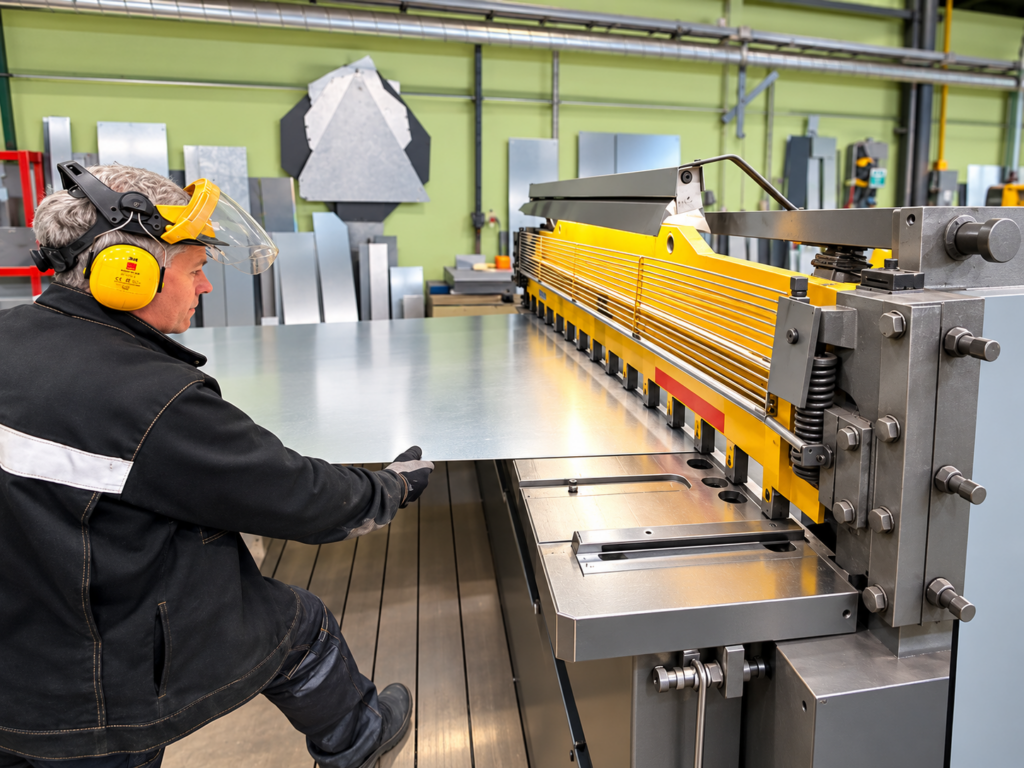
The sign blank is made in the metal workshop
Before a symbol or text can go on a traffic sign, the physical blank has to be made.
In the metal workshop, the sheet is cut to size with a guillotine. The corners are then formed with a press, and the blank is finished using milling machines and other equipment.
If required, the back of the sign is also painted.
The result is a finished blank cut to the correct dimensions, ready for the next stage, where the sign face is made.
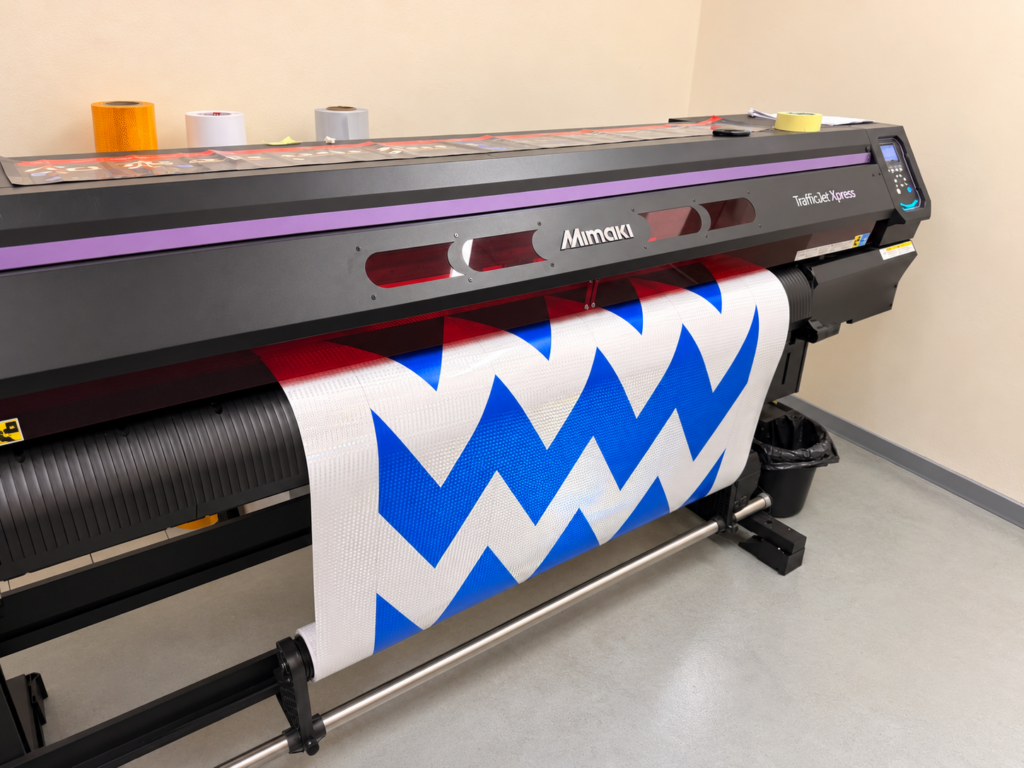
The design goes onto reflective sheeting
Once the blank is ready, work on the sign face begins.
The design is printed onto suitable reflective sheeting using a dedicated TrafficJet sign printer. This technology is built for traffic sign production and can produce both standard traffic signs and custom solutions.
At this stage, both the accuracy of the image and the suitability of the materials matter. The symbols, colours and dimensions of a traffic sign must match the order and the requirements that apply to that specific sign.
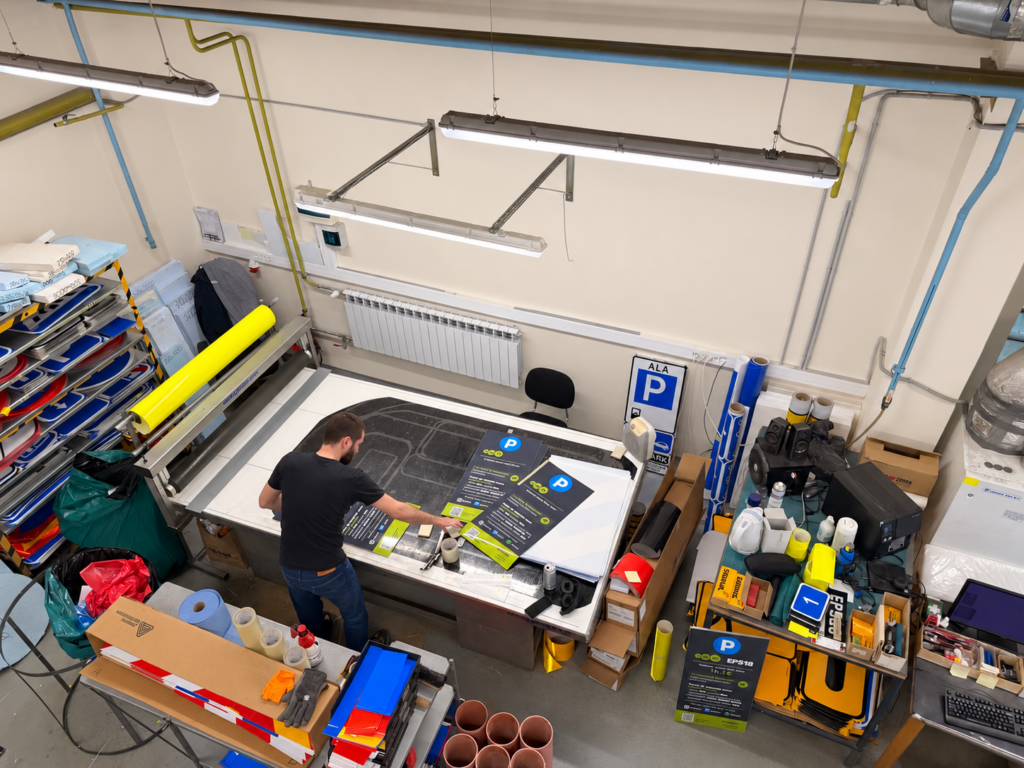
Applying the sheeting takes precision and skill
The printed image has to become an accurate and durable sign face.
To achieve this, our staff use special laminating tables and a pressure roller to apply the reflective sheeting to the sign blank.
Although production relies on modern equipment, this stage is still largely done by hand. The sheeting has to be applied carefully so that no air bubbles, creases or other defects are left underneath.
This is where technology meets the experience of our staff. The finished sign must be even, accurate and durable, even in Estonia’s changeable weather.
What is a traffic sign made of?
Both the sign blank and the reflective sheeting applied to its surface play an important role in making a traffic sign.
Depending on the order and technical requirements, we use materials such as galvanised steel sheet or aluminium for permanent sign blanks. The sign face is covered with reflective sheeting, which helps drivers see the sign in the dark when vehicle headlights shine on it.
The materials we use include Avery Dennison reflective sheeting.
Reflective sheeting is divided into classes that include RA1 and RA2. The classes differ in how they reflect light: as a rule, a higher-class sheeting gives stronger retroreflection.
The right sheeting class is chosen according to where the sign will be used, the project and the applicable requirements. This is why it isn’t enough to decide based only on whether the sign is going in an urban area or on a main road.
Quality control before dispatch
A traffic sign goes through several production stages and passes through the hands of different specialists.
Each employee is responsible for the quality of their own work. In addition, finished signs are spot-checked during production so that any defects are caught before the product reaches the client.
For permanent signs, proper conformity marking is also important. CE marking is applied when the requirements for the products concerned call for it and the conformity assessment conditions have been met.
After the final check, the sign is ready for dispatch and installation.
Permanent sign or temporary traffic management sign?
Not all traffic signs are made for the same kind of use.
Permanent signs are made for long-term use. What matters most for them is durable materials, weather resistance and compliance with the requirements for permanent signs.
Temporary traffic management signs are used at roadworks and events, for example, where traffic arrangements change often. They must be suitable for repeated installation, relocation and storage. Depending on the solution, plastic blanks are also used to make them.
Temporary signs must also be fit for their intended use and meet the relevant requirements.
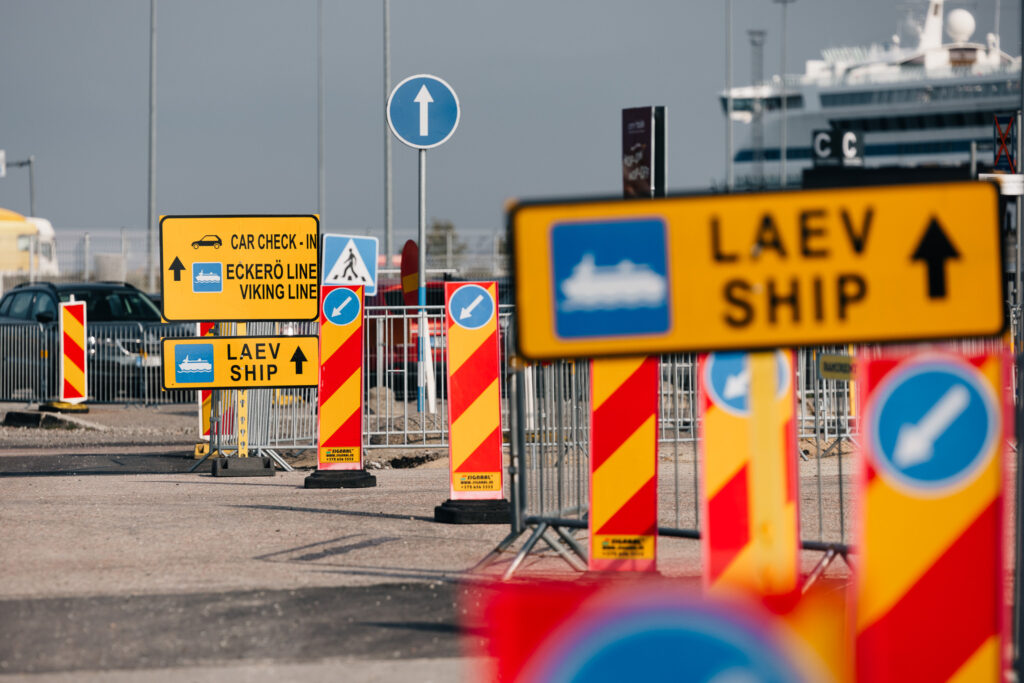
How long does a traffic sign last?
The service life of a traffic sign depends on several factors: the materials used, the properties of the reflective sheeting, the installation site, maintenance and external damage.
A standard permanent sign can be expected to last around 7–10 years, but its actual lifespan depends on the specific conditions.
Signs are affected by sunlight, rain and snow, as well as winter road maintenance. Snowploughs can throw salt, sand and other road debris against a sign. Windblown sand and other abrasive particles can also wear down the sign surface over time.
This is why a sign’s lifespan isn’t determined only by the materials used to make it. The conditions in which the sign does its job matter just as much.
How quickly can a traffic sign be made?
How long it takes to make a traffic sign depends on its size and complexity and on whether the required blanks and materials are already in stock.
Producing one sign can take around 2–4 hours. If the blank is already available and it is a standard sign, it can be made in as little as around 30 minutes.
For standard orders, the lead time is often 1–2 working days, and standard signs made from materials in stock can sometimes be dispatched the same day.
For urgent orders, we assess what is possible based on the specific order and our current production workload.
Having our own production facility in Tallinn is our advantage. It gives us greater control over the production process and lets us respond flexibly to our clients’ needs.
Our signs on Estonia’s roads
Depending on orders, Signaal TM produces around 10,000–13,000 traffic signs a year.
Signs we have made are in use on many of Tallinn’s major streets and roads, such as Pirita tee, Reidi tee and the newly completed section of Peterburi tee.
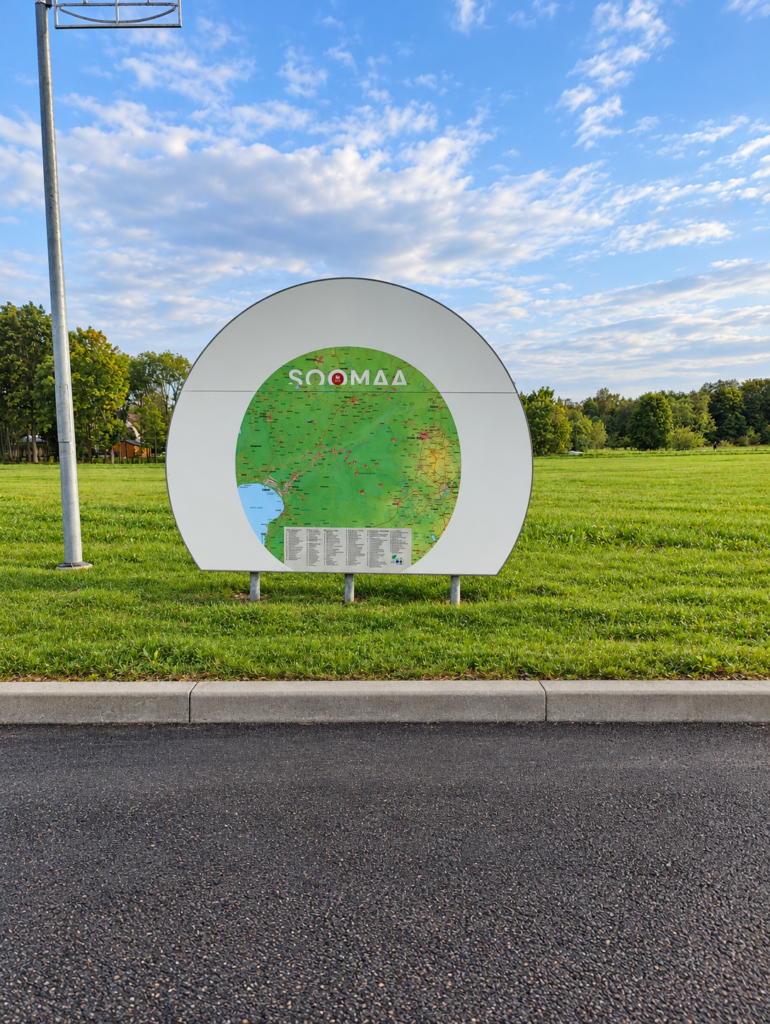
One of our most unusual projects was for Soomaa National Park. We made 20 large information boards, two metres in diameter, for the national park boundary.
Projects like this show that our production capability isn’t limited to standard traffic signs. We also make custom solutions, where both technical execution and the specific needs of the project matter.
Decades of experience, modern technology
The principles of making traffic signs have largely stayed the same over the years, but production technology has moved on.
We upgrade our equipment regularly to maintain production quality and keep our processes efficient. For example, a sign printer needs replacing over time, and our current TrafficJet has been in use for around a year.
One thing hasn’t changed, though: a good traffic sign is the result of precise work, the right materials and experienced people.
Since 1974, we have helped shape Estonia’s traffic environment with signs that give road users clear and easy-to-understand information.
What do you need to order traffic signs?
Ordering is quickest when you already know which signs you need.
If possible, include the following with your order:
- Sign name or number – which traffic sign do you need?
- Dimensions – what size should the sign be?
- Reflective sheeting class – for example RA1 or RA2, depending on the project requirements.
- Quantity – how many signs do you need?
- For custom signs, a drawing or sample– if possible, attach a production drawing or a visual of the solution you have in mind.
If you don’t know all the technical details yet, we will help you find the right solution.
Order traffic signs directly from the manufacturer
Do you need traffic signs for a new site, to replace existing signs or for a custom solution?
AS Signaal TM manufactures traffic signs at its own production facility in Tallinn, offering both standard signs and made-to-order solutions.